From Index Cards to Searchable Catalogues
From index cards to searchable catalogues, see which record system fits your collection, how people will retrieve items and what each format leaves visible.
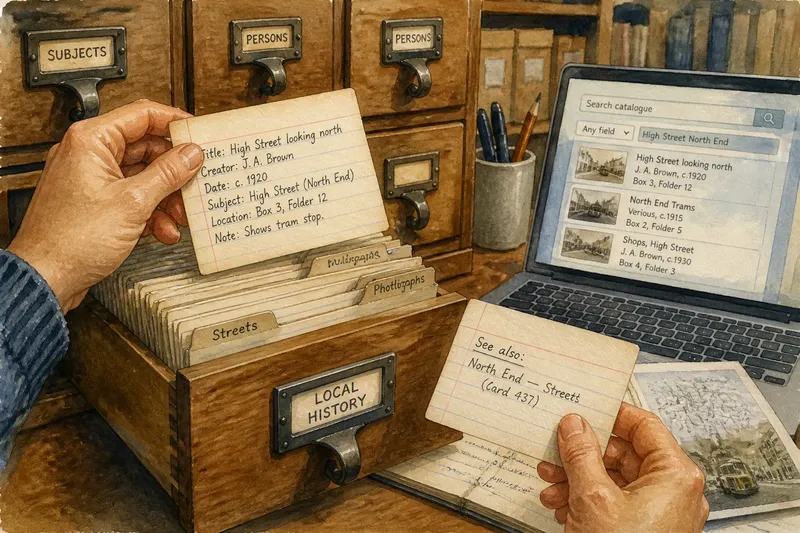
A librarian pulls a card from a wooden drawer, checks its subject heading, then follows a handwritten reference to another card. From index cards to searchable catalogues, the change is not simply from paper to screen: it is a change in how records are stored, linked and retrieved. The useful question is which system fits the collection and the people who need to find things.
Choose the system around the way people search
A catalogue is an organised set of records that describes items and helps someone locate or identify them. An index card is a physical record, usually one card per item or entry, filed in drawers according to a deliberate arrangement. A searchable catalogue stores records in a digital system and lets people retrieve them through typed queries and other available fields.
Neither format decides by itself what an item means or how it should be described. A card can include a title, author, subject, shelf location and a note; a digital record can hold corresponding fields. The difference is that a card is encountered within a physical filing arrangement, while a digital record can be retrieved through several routes if the catalogue has been designed to support them.
Start by noticing what a person does when looking for something. They might know the creator but not the title, remember a phrase, browse a subject, or have a reference number in hand. A physical drawer makes one filing order prominent. A searchable system can offer more entry points, but only when the record contains useful information and the search function can use it.
Keep cards when the collection is local and browsable
Index cards can suit a small, stable collection used in one place by people who know its arrangement. A community archive, club library or workshop may need a simple record of what is held and where it belongs, without requiring a computer, account or network. Cards also make the sequence of entries visible: someone can browse nearby cards and notice neighbouring subjects or names.
That visibility has a cost. A card normally sits in one physical position, so finding an item depends on knowing the filing rule and being able to reach the relevant drawer. If several people need to consult the same collection from different places, a single set of cards can become a bottleneck, and keeping duplicate drawers aligned takes care.
Choose cards when the collection is modest, the users share a location, browsing the physical sequence is valuable, and someone can maintain the filing consistently. They are less suitable when records change often, people search from elsewhere, or a single item needs to appear in several distinct discovery routes. In those situations, the main issue is not paper itself but the limits of a fixed filing position.
Use a searchable catalogue when access needs more routes
A digital catalogue suits a collection whose users may search by different details or from more than one location. Depending on its design, someone might search a title, creator, subject term, identifier or words in a description. A record can also link to related entries, show availability, or connect an item to a digital copy where the system supports those functions.
Search does not remove the need for careful description. If a record uses an unfamiliar name, omits a useful subject, or stores a detail in a field that the search does not examine, a person may not retrieve it with the terms they know. A screen can conceal the catalogue’s underlying arrangement, too: users may see a results list without understanding why records appear together or how the collection is organised.
Choose a searchable catalogue when remote access, multiple search routes, frequent updating or links between records matter more than browsing a single physical sequence. Consider who will maintain the records, how the catalogue can be accessed, and whether its search fields match the language users are likely to try. A digital system offers ways to retrieve information; it does not make every record complete or every search successful.
Use both formats when browsing and remote retrieval both matter
Some collections benefit from keeping cards as a working aid while also maintaining a digital catalogue. Cards can support in-room browsing, temporary notes or a familiar local routine; the searchable version can help people find records before they visit or locate an item through another descriptive field. The two formats then serve different uses rather than competing to be the one true catalogue.
A dual system also creates an extra responsibility: the records must not quietly diverge. Decide which version is authoritative for each detail, who updates it, and how a change is carried across. If the card gives a different location from the digital record, users may lose trust in both. For a small collection, keeping two versions current may take more effort than the added access is worth.
Say a neighbourhood history group has folders of photographs in one archive room, and residents often ask about a street name without knowing a photograph’s title. The group could keep its cards beside the folders for volunteers who browse in person, while adding searchable descriptions that include street names. The expected observable result is that a visitor can still browse the drawers, while a resident can try a remembered street name in the catalogue; the group would need a routine for updating both records when a folder moves.
What should you decide before choosing?
Who needs to find the records?
If nearly everyone uses the collection in one room, cards may be accessible and easy to understand. If people search from different places or need access without visiting, a searchable catalogue is usually a better fit, provided users can reach it.
What details do people know when they search?
People who arrive with a shelf label or a clear filing term may do well with cards. When they may remember only a partial title, a creator’s name or a subject phrase, a catalogue with relevant searchable fields offers more possible starting points.
How often do records change?
For a collection that rarely changes, a well-maintained card file can remain workable. If items move, descriptions are corrected or new records are added regularly, a digital catalogue may make updates easier to share, though someone still has to enter and check them.
Is browsing part of the point?
Cards expose a physical sequence that can invite a person to look beyond the item they came to find. A catalogue is better at targeted retrieval across several fields, but its results may feel narrower unless it also offers browsing or related records.
Plan the move as a change in retrieval
Moving from cards to a catalogue is not just copying text onto a screen. First decide what each record needs to say, which details people will search, and how a record points to the item itself. A card may combine several facts in freehand notes; a digital form may ask for separate fields, so copying the text without considering those fields can leave useful information hard to retrieve.
For a manageable transition, work with a small group of records before committing the whole collection. Compare the card’s details with the catalogue fields, try searches using the words a real user might know, and check that the location or identifier leads to the item. This is a way to expose gaps in the design, not a claim that one trial can predict every future search.
Decide how to handle duplicates, uncertain descriptions and items with several useful names. A photograph might be known by a folder title and by the street depicted; a card file can point to more than one entry, while a catalogue can store those terms in separate fields or notes. What matters is that the chosen method is consistent enough for staff and users to understand.
If the card file will remain available, mark its relationship to the digital record clearly. It might serve as a local browsing aid, a historical record of earlier descriptions or a temporary source during a gradual transition. Avoid presenting two versions as equally current if they are not kept in step.
Make the choice fit the collection’s working life
From index cards to searchable catalogues, the central change is a shift in the routes people can take through records. Cards make a filing sequence tangible and local; searchable catalogues can open several routes to an item and make records available beyond the drawer. Each format still depends on understandable descriptions, reliable locations and someone who keeps the record useful.
For a small collection used in one room, retain cards if their visible order helps people browse and the filing is easy to maintain. Choose a searchable catalogue when users need remote access, varied search terms or frequent updates. Keep both only when each has a distinct job and the people responsible can keep their information aligned.
Before settling the decision, watch someone unfamiliar with the collection try to find an item using only the clues they are likely to have. Their first move—opening a drawer, asking for a subject term or typing a remembered phrase—can reveal more about the right record system than the appeal of paper or screen alone.